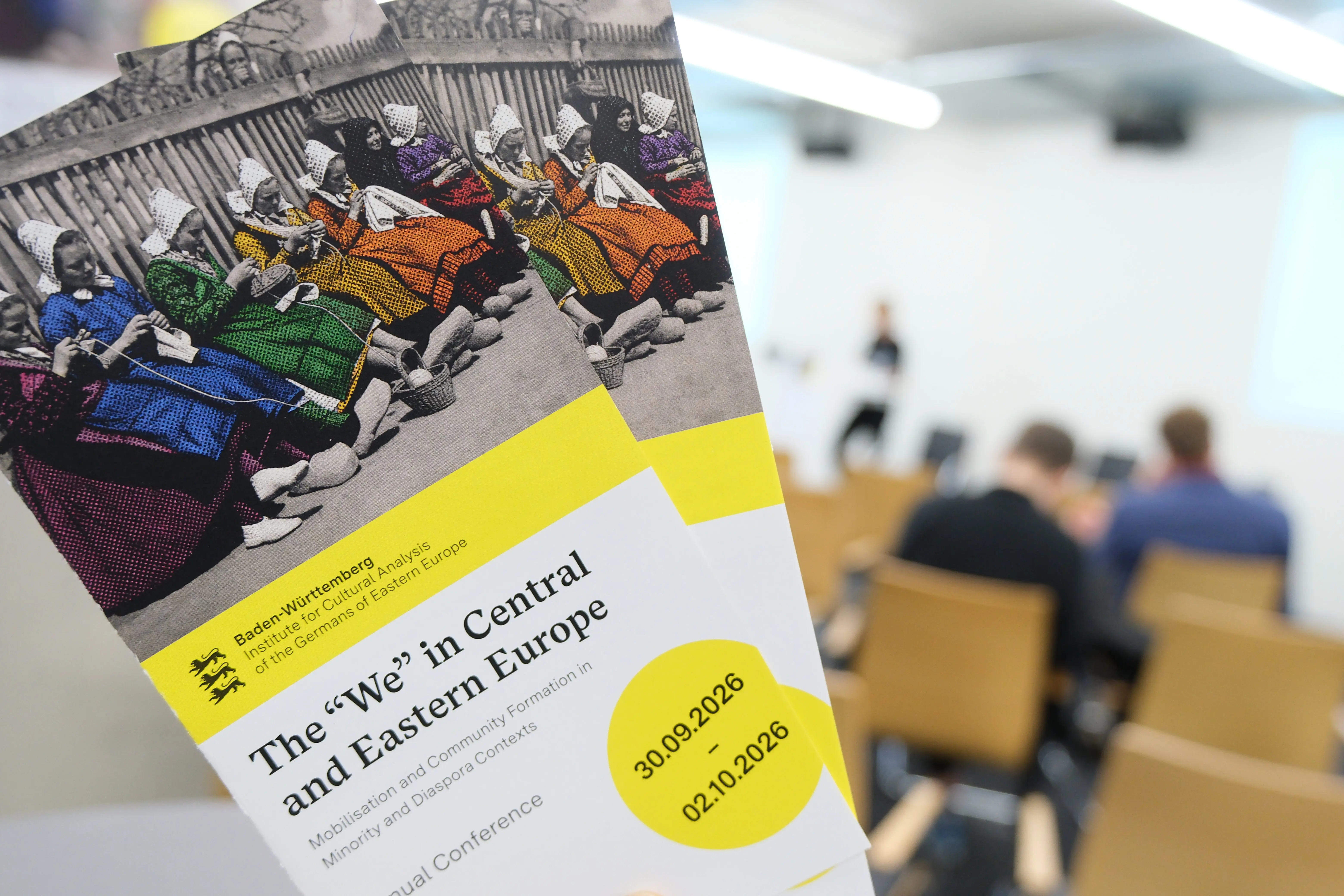
We is not merely a regional, an ethno-linguistic or a temporal category, but an intertwined one. To what extent does this affect our sense of shared or multiple identity in terms of communities of memory, commemoration – and how does this still speak to us today? Where are the results of community-building processes which, however, are by no means guaranteed to endure, and thus raise questions about memory, tradition and, consequently, the shared cultural heritage of migrant societies, in which not only German mobility, but also the many different layers in past and present can be recognised in academic as well as popular discussions and in public spaces? [...]
What then is WE, particularly in migrant and diaspora societies, in Central and Eastern Europe, or, with Brubaker, “What are we studying when we study” groups?
(Auszug aus der Eröffnung, Jana Stöxen)
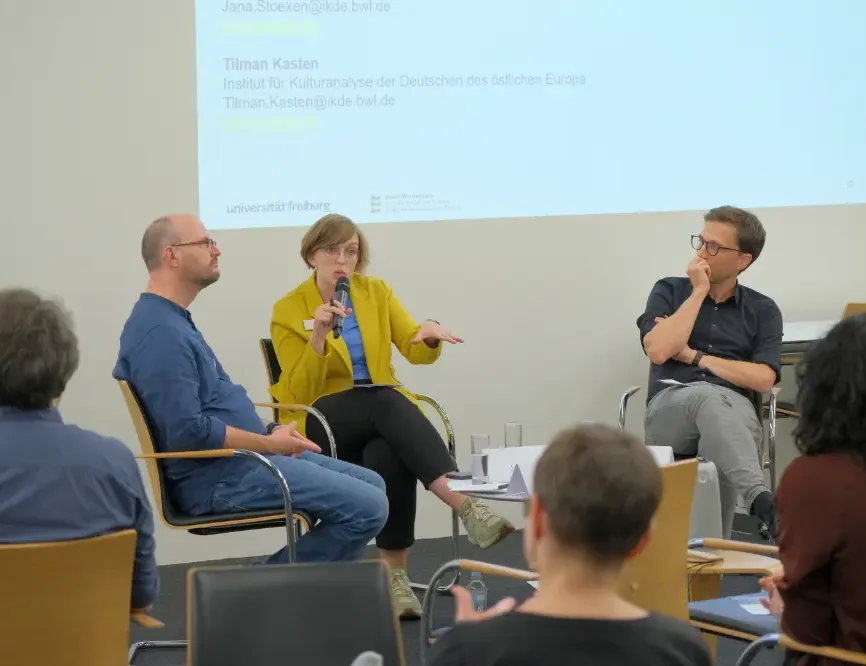
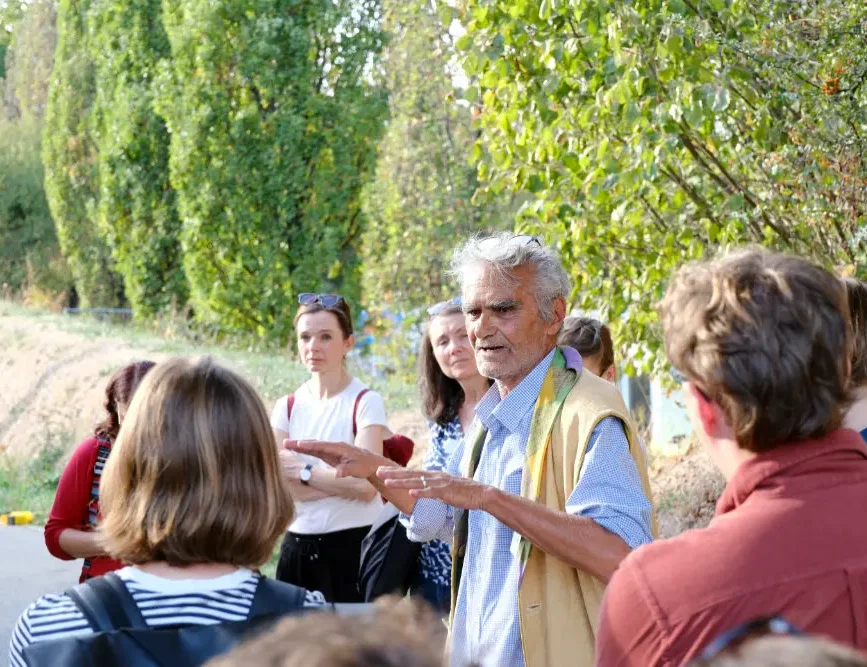
Diesen Fragen näherte sich die diesjährige Jahrestagung in wechselvollen Formaten an, die ihrerseits eine vielstimmige, internationale Community auf Zeit schufen: Die Beiträge und Diskussionen reichten von klassischen Vortragsformaten über gemeinsame Panel bis hin zu einem Neighbourhood Walk durch Freiburg-Weingarten. Gerade in diesem Brückenschlag zwischen theoretischen sowie fallspezifischen Analysen und ihrer lokalen Verräumlichung wurde das Thema rundum zugänglich.